
Why a hot outlet or burning odor matters
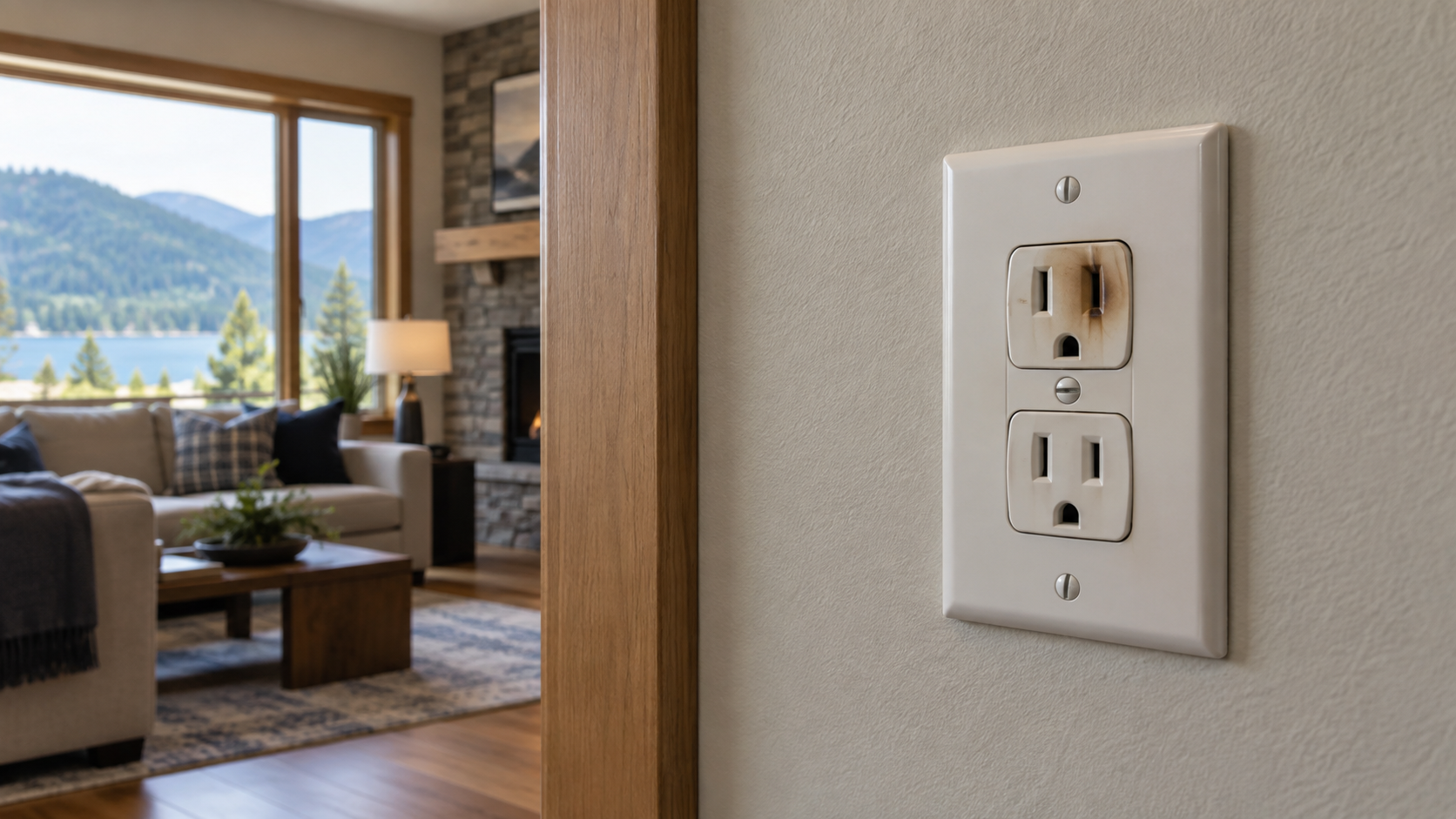
An ordinary receptacle or switch should not become uncomfortably hot, smell like burning plastic, or develop dark discoloration. Those symptoms can be associated with overheating, a loose or deteriorated connection, a damaged device, an excessive load, a failing plug or appliance, or a problem at another connection on the circuit.
The symptom does not identify the exact cause. It does tell you that continuing to use the device can add heat or re-energize a fault before the condition is understood.
Safe first steps
- Stop using the outlet, switch, or connected equipment. Do not plug something else in to see whether it works.
- Unplug a connected cord only if the area is cool, dry, undamaged, and clearly safe to approach. If the plug or device is hot, damaged, smoking, or difficult to reach safely, leave it alone.
- Keep other people away. Do not cover the odor with ventilation and assume the condition is resolved.
- Leave the circuit off if it has already tripped. Do not repeatedly reset a breaker.
- Call a licensed electrician. Describe the odor, heat, sound, discoloration, connected equipment, and when the symptom began.
What not to do
- Do not remove the faceplate or outlet from the wall.
- Do not tighten screws, probe the slots, or touch conductors.
- Do not replace a breaker with a larger rating or bypass a protective device.
- Do not keep using an extension cord, heater, appliance, or power strip that appears connected to the symptom.
- Do not assume the nearest visible device is the only point that needs inspection.
Why the cause may be somewhere else
Power can pass through more than one connection before reaching the device you are using. A receptacle that is not actively powering an appliance can still become warm when it is part of a circuit carrying current elsewhere. That is one reason visual inspection alone is not enough and why a technician may evaluate other devices or connections on the same circuit.
What an electrician may evaluate
The goal is to identify why heat developed, not simply install a new faceplate. Depending on the situation, professional troubleshooting may include the device, plug and connected equipment, conductor condition, terminations, circuit load, breaker behavior, upstream and downstream connections, moisture exposure, and signs of damage inside closed equipment after it has been made safe to inspect.
The appropriate correction could be limited to a damaged device or connection, or it could reveal a wider circuit or equipment issue. The recommendation should follow the testing rather than a guess made from a photograph.
What to send with a service request
When it is safe, send a photo from a normal viewing distance with the cover left in place. Include which appliance or device was operating, whether a breaker tripped, whether the outlet is still warm, whether the smell continues, and whether there has been water exposure or recent work nearby. Protect personal information and do not move damaged equipment solely for the photo.
Sources and further reading
The U.S. Consumer Product Safety Commission guide to home wiring hazards advises discontinuing use of an unusually hot receptacle or switch and obtaining help from a qualified electrician. The NFPA electrical safety checklist identifies warm or discolored outlets, burning odor, flickering lights, sparks, shocks, and frequent breaker trips as reasons to call a qualified electrician.