First decide who needs to respond
If there is fire, smoke, active arcing, an immediate shock hazard, or anyone may be in danger, move away from the area and contact emergency services. If a line is down, a meter or service connection appears damaged, or multiple nearby properties have lost power, contact the electric utility. Do not approach damaged utility equipment or anything it may be touching.
For a problem contained within the property—such as repeated breaker trips, a hot switch, damaged receptacle, localized power loss, or unexplained flickering—a licensed electrical contractor can help determine the safest next step. When the situation is unclear, describe exactly what you can see, hear, and smell without opening equipment or touching the affected device.
Heat, burning odor, buzzing, and discoloration
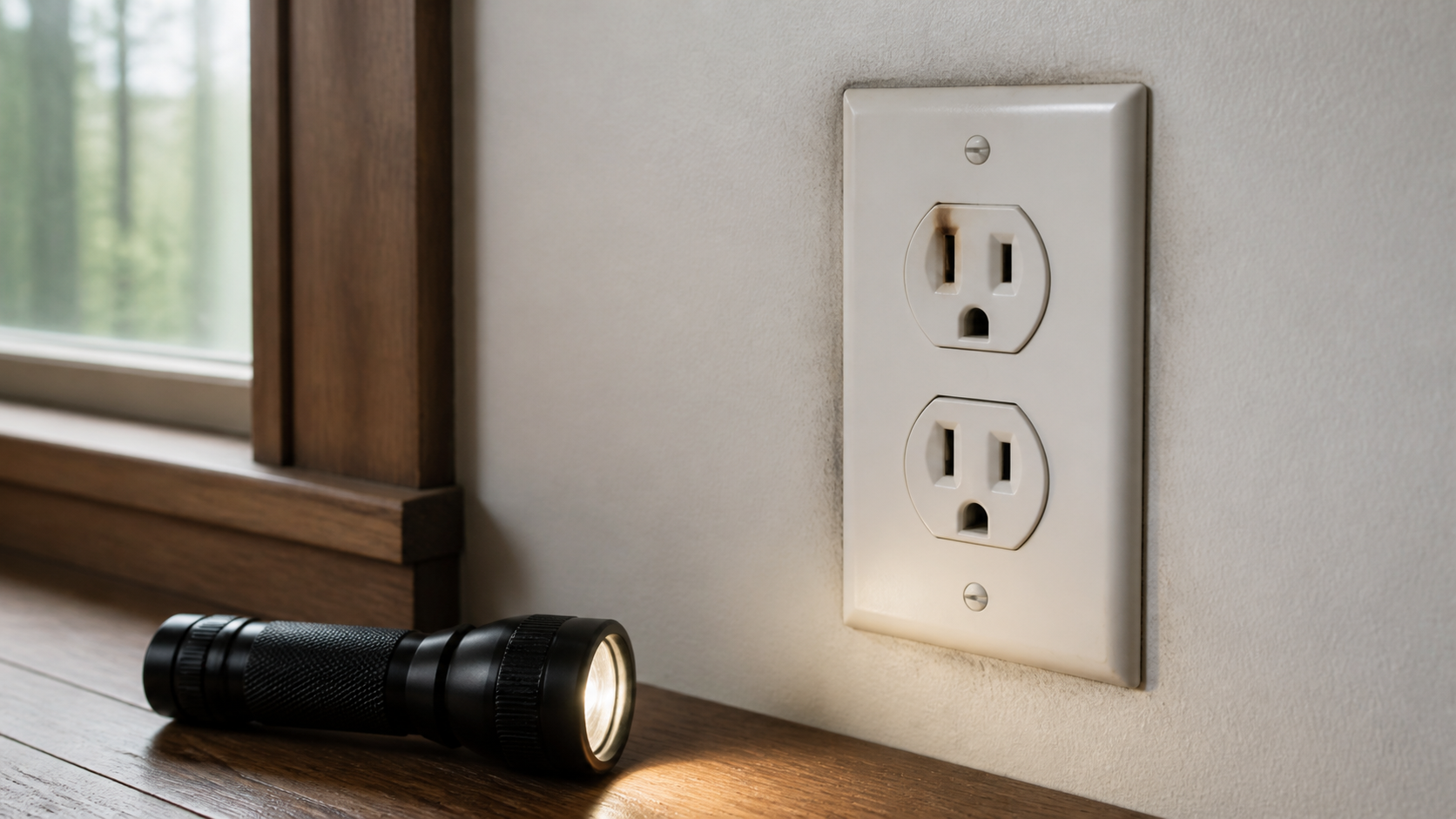
Switches, receptacles, dimmers, fixtures, plugs, and electrical panels should not produce a persistent burning smell or unusual buzzing. Discoloration, melting, cracking, or a faceplate that feels unexpectedly warm can point to a loose connection, a damaged device, an incompatible load, or another condition that requires review.
Stop using the affected device or appliance when it is safe to do so. Do not remove the cover, probe the opening, or attempt to tighten wiring. If smoke or active sparking is present, treat it as an emergency rather than a normal service appointment.
Shocks, tingling, or electricity where it should not be
A shock or tingling sensation from an appliance, metal cover, faucet, fixture, or other surface is not normal. Avoid touching it again to “test” whether the symptom repeats. Keep other people away and contact an appropriate professional. Conditions involving moisture, damaged grounding or bonding paths, equipment faults, or deteriorated wiring can require careful diagnosis.
Partial outages and persistent flickering
One dead receptacle may have a different cause than half of a home losing power. Note which rooms, lights, appliances, or circuits are affected. If the problem appears to involve the service, meter, or utility connection—or lights throughout the property are changing brightness unexpectedly—contact the utility and an electrician as appropriate.
Flickering caused by a single loose lamp is different from multiple circuits behaving unpredictably. The pattern helps narrow the investigation, so record when it happens and what equipment is operating at the time.
What information helps an electrician respond
Only gather information when it is safe. A useful first message can include:
- The property location and the best callback number.
- What happened, when it started, and whether it is still happening.
- Any heat, odor, sound, visible damage, water exposure, or recent electrical work.
- Which rooms, appliances, or circuits are affected.
- A photo taken from a safe distance with all electrical covers left closed.
This information helps distinguish a utility problem, an immediate emergency, and a service call that can be scheduled for professional electrical troubleshooting.
After the immediate problem is safe
Troubleshooting should identify the cause rather than simply restore power. The long-term correction may involve a damaged device, a failing appliance, circuit changes, moisture protection, a panel repair, or broader capacity planning. Shaka Electric explains the findings and separates the immediate repair from optional future improvements.