

Brightness is not the same as useful light
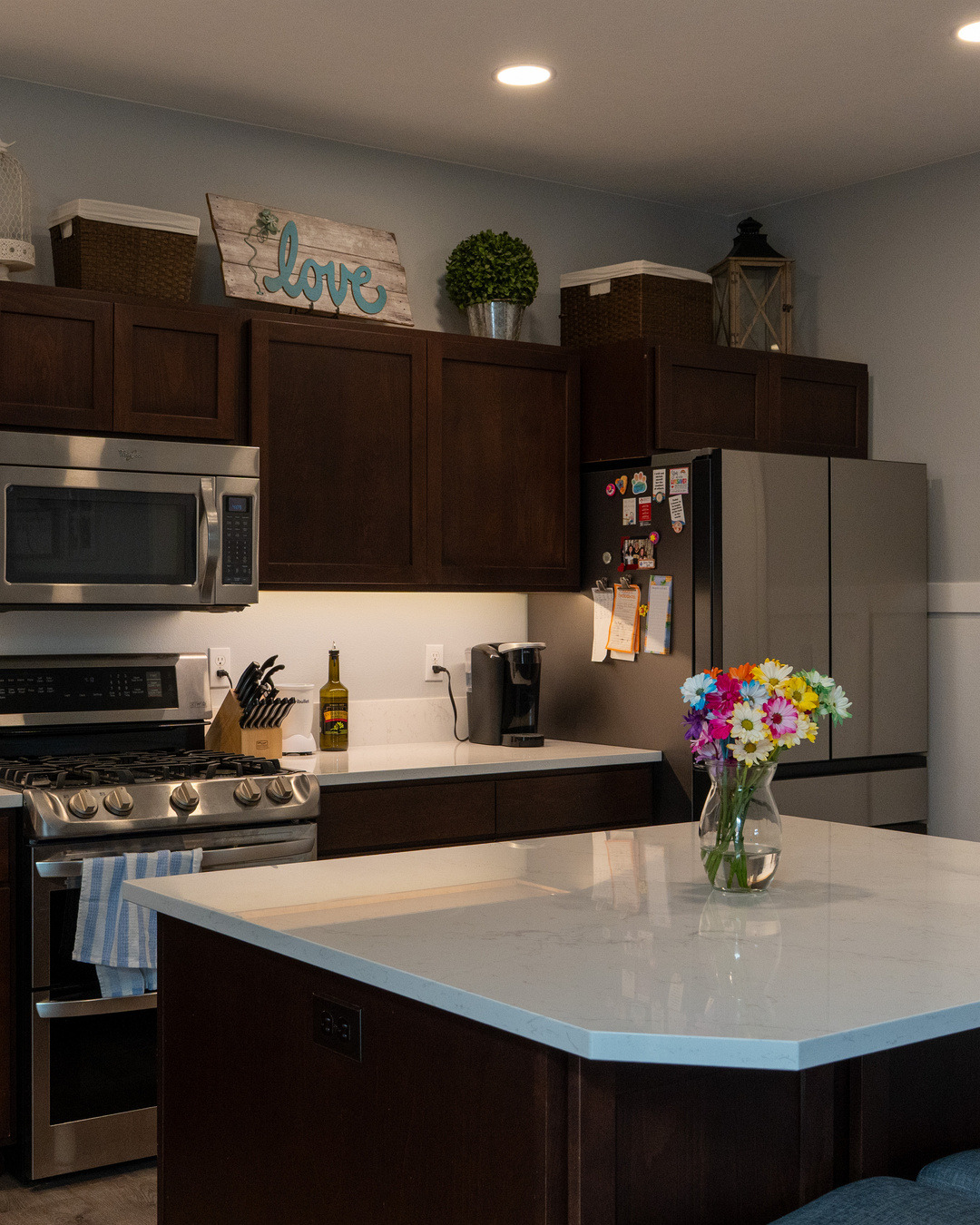
A ceiling full of recessed fixtures can make a kitchen bright, but brightness alone does not guarantee that the countertops are easy to see. When someone stands between an overhead fixture and a work surface, their body can cast a shadow directly over the place where they are preparing food.
Task lighting solves that problem by placing light close to the work surface. Under-cabinet lighting illuminates counters, sinks, corners, and prep areas without putting glare in your eyes. Overhead lighting still has a purpose, but it should be one layer in a thoughtful plan—not the entire plan.
Why homeowners value under-cabinet lighting
Under-cabinet lighting is one of those features homeowners often do not realize they need until they live with it. Once installed well, it becomes part of the daily rhythm of the kitchen.
- Better countertop visibility: Food preparation, cleanup, and other detailed tasks become easier.
- A softer nighttime option: The kitchen can remain usable late at night without turning on bright overhead fixtures.
- More visual depth: Light brings out the color and texture of countertops, backsplashes, and cabinetry.
- A more premium atmosphere: A well-designed layer of light makes the room feel deliberate and finished.
What separates a clean installation from a poor one?
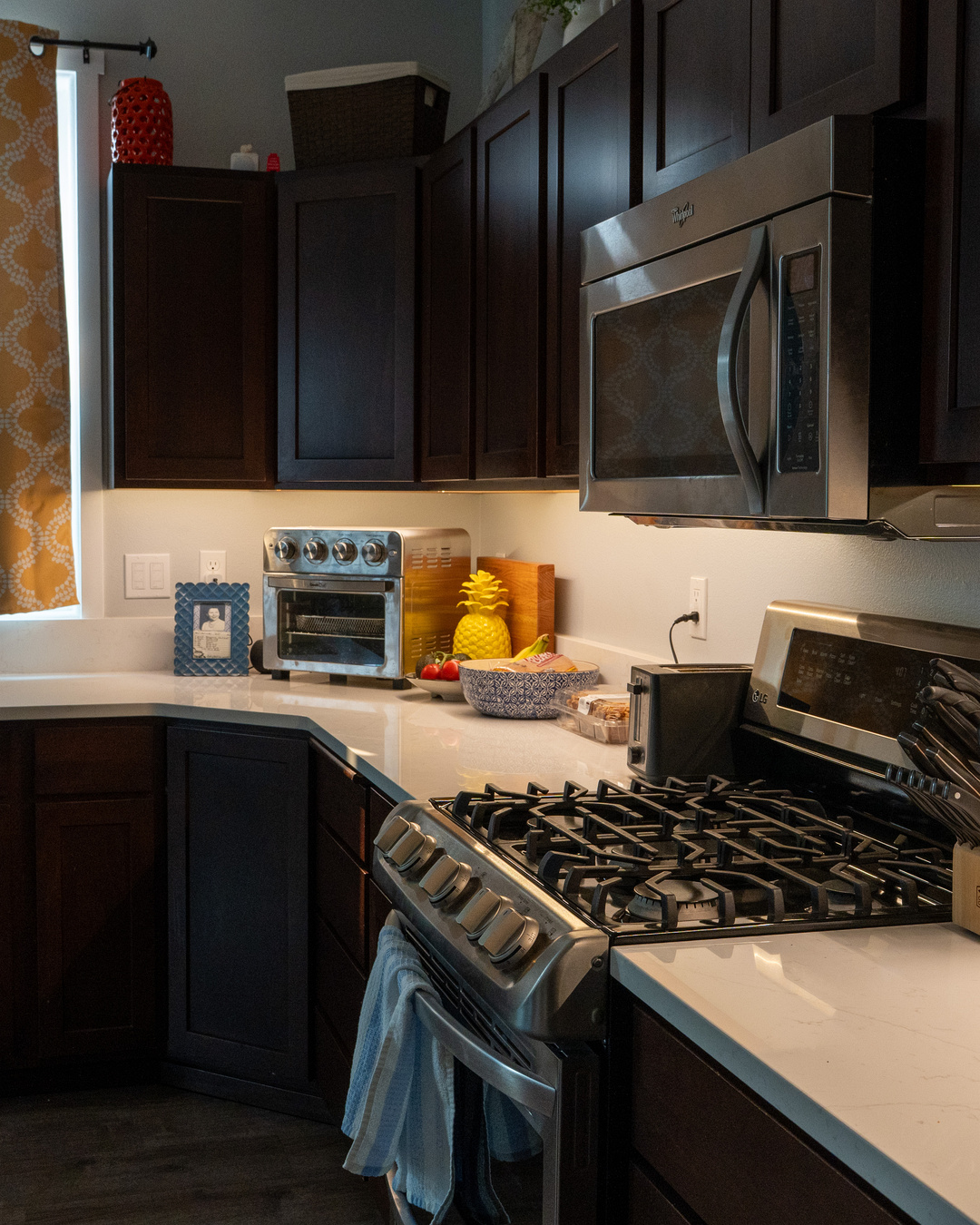
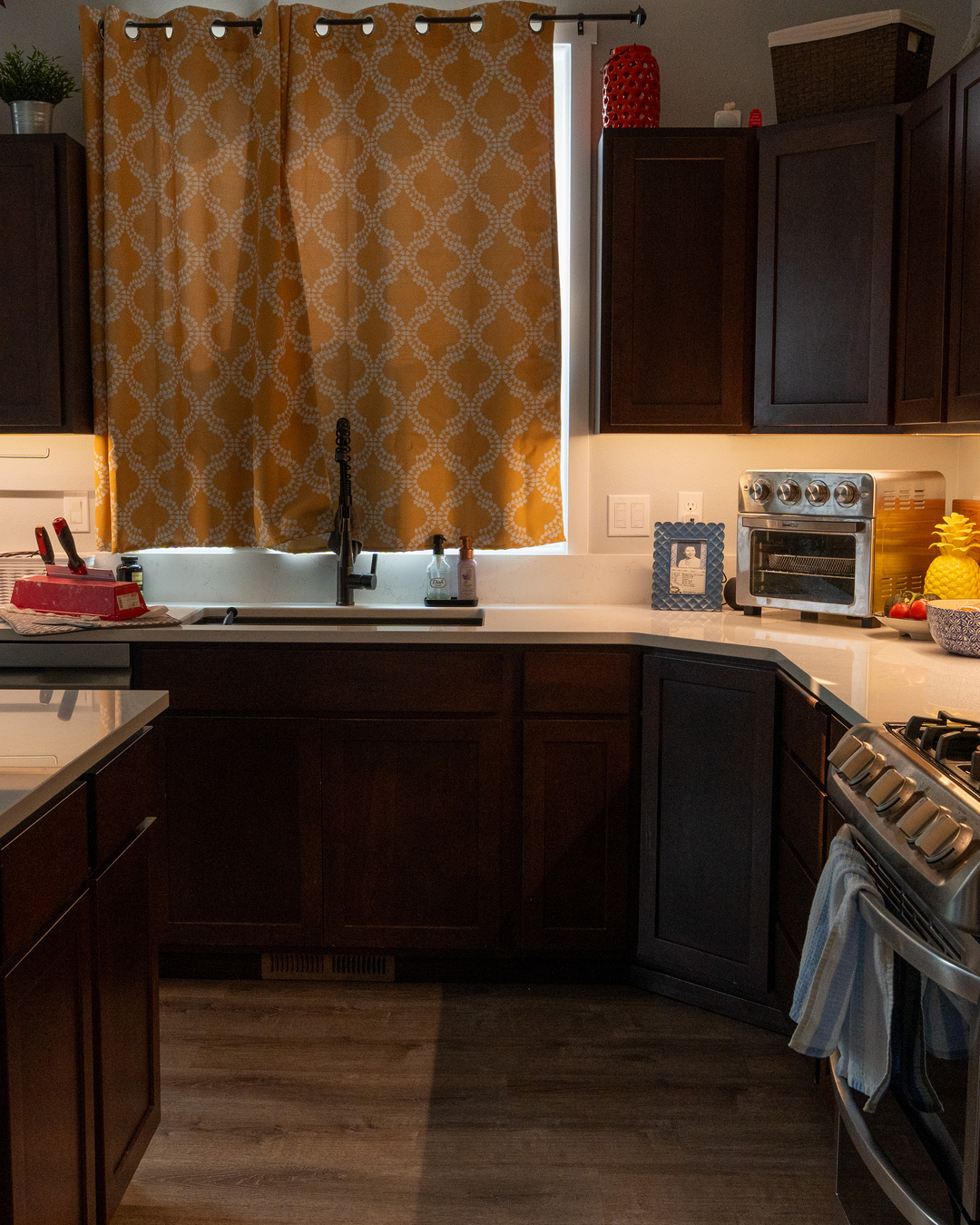
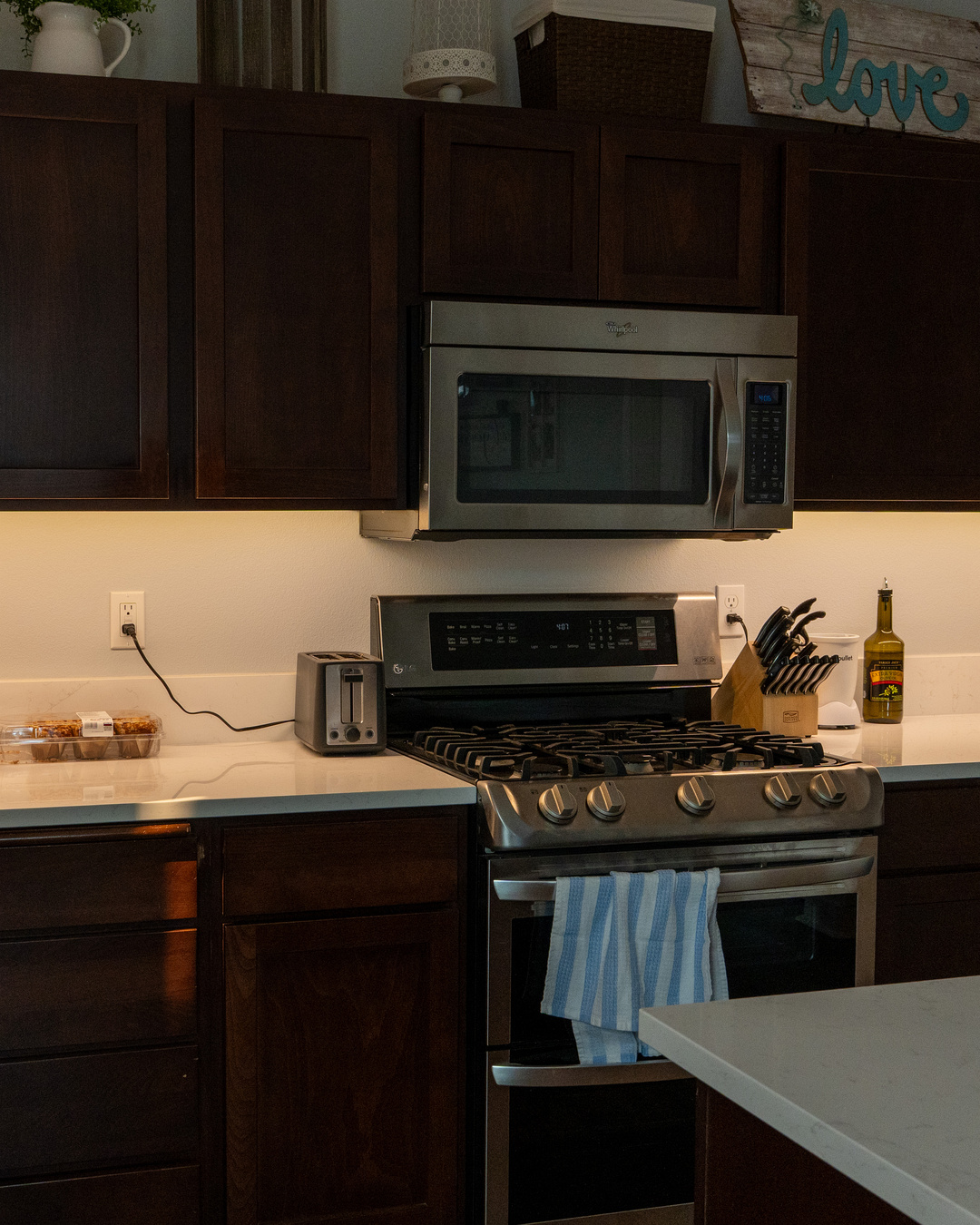
The goal is not to notice the light source. The goal is to appreciate what the light reveals. A finished installation should blend into the cabinetry, distribute light evenly, and keep wiring and equipment out of sight.
Common problems include an uncomfortable color temperature, visible bright spots, uneven output, exposed wiring, undersized LED drivers, and non-listed components that may fail prematurely. The LED tape, channel, lens, driver, controls, wire routing, and mounting location should be selected as one coordinated system.
Task lighting belongs beyond the kitchen
The same principle applies anywhere a specific activity benefits from focused, comfortable light. Useful locations include workbenches, bathroom vanities, closets, pantries, offices, display areas, and reading spaces.
For a reading nook, a wall sconce, small up/down light, or controlled lamp may be more comfortable than an overhead fixture. Toe-kick lighting can complement under-cabinet lighting by creating a subtle path through a kitchen or bathroom. Smart controls can bring these layers together so the right scene is available without effort.
Start with how you want to use the room
Homeowners do not need to arrive with a complete lighting design. Start with the activities, times of day, surfaces, and atmosphere that matter to you. An electrician with an eye for design can translate those needs into fixture locations, control options, color temperature, and an installation plan.
When the planning happens early, the finished lighting feels effortless: clean, useful, out of sight, and ready every time you need it.