

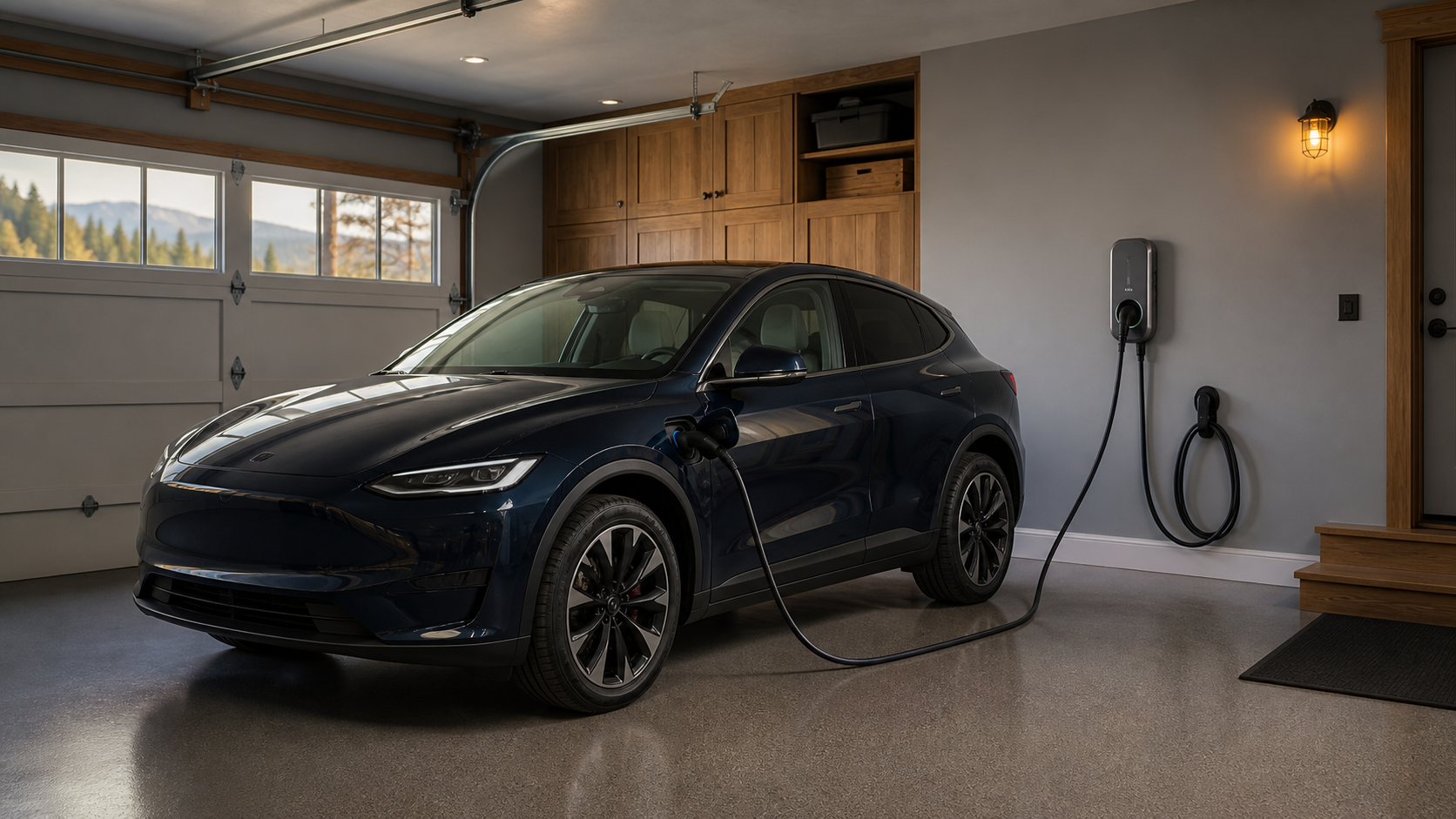
The charger is only one part of a home charging setup. It is better to answer the installation questions before ordering equipment than to discover later that the model does not fit the space, vehicle, or finished result you expected.
If you are planning home EV charging in Coeur d'Alene, Post Falls, Hayden, Rathdrum, or a nearby North Idaho community within Shaka Electric's service area, work through these five decisions first.
1. Where does the vehicle actually park?
Start with the real parking position, not a product page. Which side of the vehicle has the charge port? Will the car be in the same spot every night? Would the cable need to cross a walkway, pass around a garage door, or reach an outdoor parking area?
A charger that looks perfect online can become frustrating when its cable barely reaches or creates a tripping path. The cleanest location should support normal parking without a nightly routine of stretching, moving, or draping the cable.
2. How much charging do you actually need overnight?
Faster is not automatically better. The right setup depends on the vehicle, the miles normally driven, the time available to charge, and whether more than one EV may use the home later.
A homeowner with a short daily commute may have a different need than someone who regularly returns home with a low battery and leaves early the next morning. The goal is not to install the largest option simply because it exists. The goal is to choose a charging plan that reliably supports real life.
Before the electrical conversation, write down three things: the vehicle model, average daily miles, and typical overnight charging window.
3. What else is already asking for power?
Home charging becomes part of the house's overall electrical demand. Heating and cooling equipment, cooking appliances, water heating, a hot tub, a shop, and other large loads all matter when evaluating available capacity.
That does not mean every EV charger requires a service upgrade. It means the decision should be based on the actual home and charging plan rather than a guess. An electrician can review the service equipment, existing loads, equipment requirements, and code-compliant options before recommending the path forward.
Keep the planning step safe: do not remove panel covers or attempt electrical work. A clear photo of the closed service equipment and its labels can help begin the conversation.
4. What is the cleanest route from power to parking?
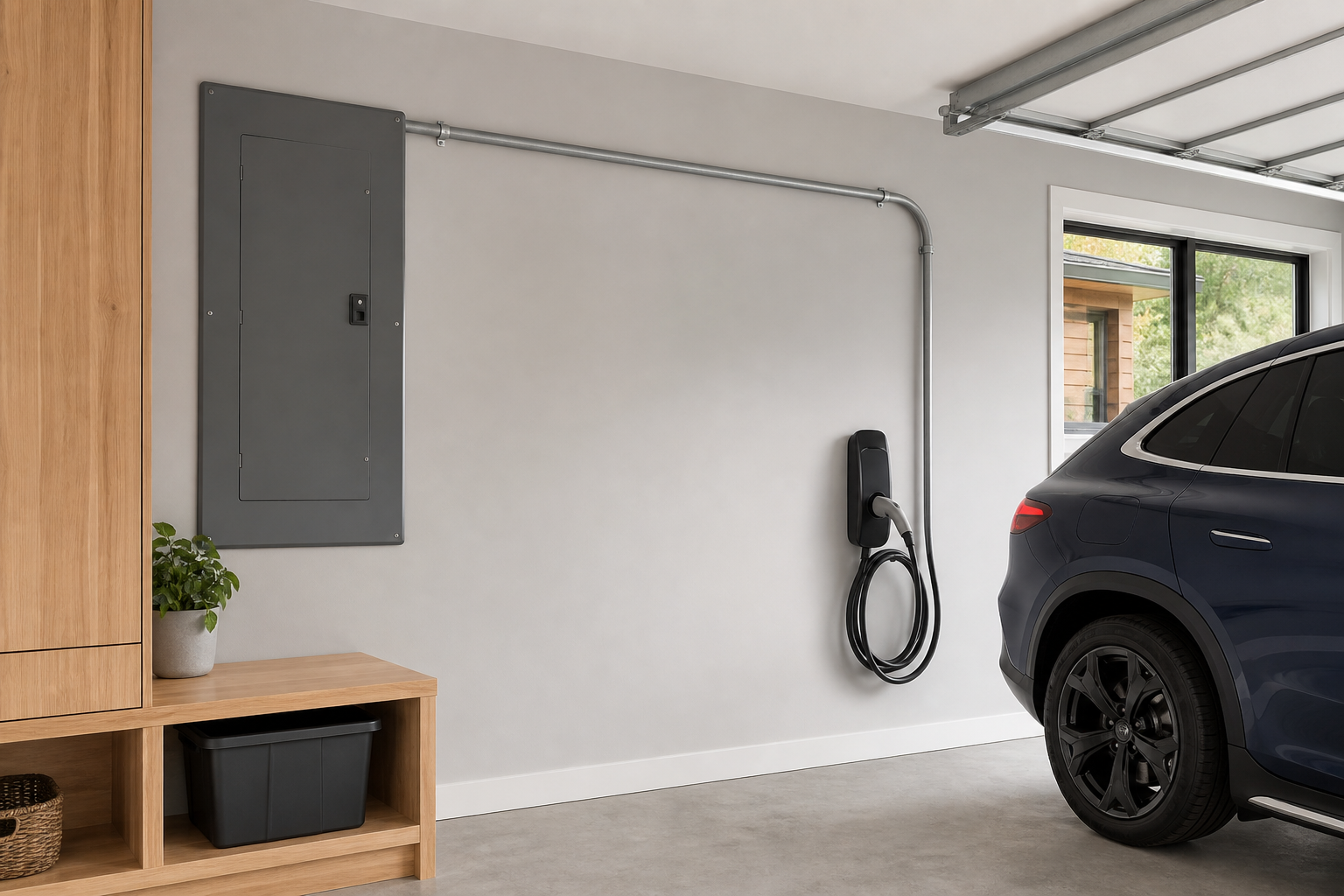
The distance between the electrical source and charger location affects the installation. So do finished walls, attic or crawl access, garage construction, exterior exposure, and the route around doors, windows, storage, and future projects.
Sometimes the shortest route is not the cleanest finished result. Planning the path before equipment is ordered can reveal a better location. This is where an on-site review can prevent visible compromises and unnecessary rework.
For an initial review, capture one continuous video walking from the closed electrical panel to the normal parking position. Do not open electrical equipment. Simply show the route and the finished surfaces between the two points.
5. Are you planning only for today's vehicle?
A charger installation should make sense for the vehicle you own now, but it is worth discussing what may change. Could a second EV arrive? Will the garage become a workshop? Is a remodel, addition, solar project, or other large electrical load on the horizon? Could the parking position move?
Future planning does not mean overbuilding everything today. It means avoiding an installation choice that blocks an obvious next step. A good recommendation separates what you need now from what may be smart to prepare for while access is available.
What to send before an EV-charger consultation
You can make the first conversation more productive with five simple items:
- Vehicle year, make, and model.
- Charger model or product link, if you have already selected one.
- A wide photo of the normal parking position.
- A clear photo of the closed electrical service or panel and its labels.
- A short video showing the path between the two locations.
With that information, Shaka Electric can start identifying the questions that matter before anyone makes assumptions about equipment or scope.